Introducing Sake Brewing
Exploring the potential of sake with flexibility
High-quality sake brewing utilizing traditional
craftsmanship and innovative technology.
Rice Production
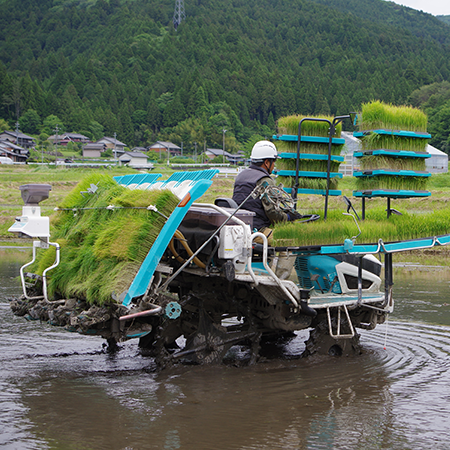
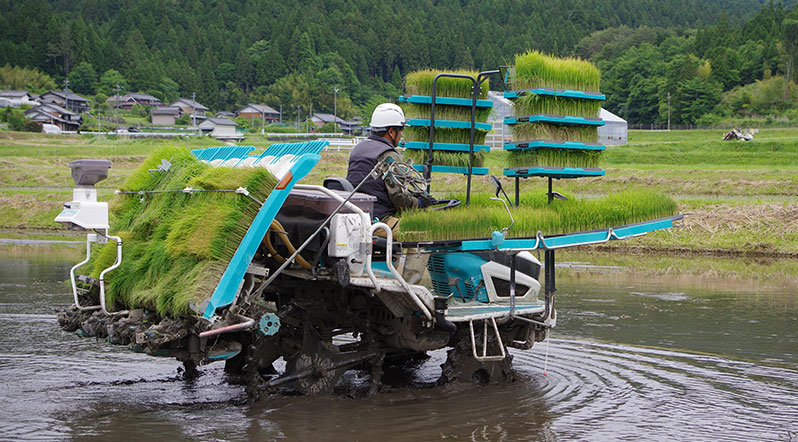
At Sekiya Brewery, some of the rice used in sake brewing, such as the brewery's own sake rice "Yumesansui" and "Chiyonishiki," is cultivated starting from the seedling stage.
360°View
Rice Production
At Sekiya Brewing, we cultivate some of the rice used in sake production ourselves. In addition to the sake rice variety "Yumesansui," which we helped develop, we also grow varieties such as "Chiyonishiki" and "Mineharuka" from the seedling stage. While supporting regional agriculture, we strive to secure stable supplies of high-quality ingredients.
There are two types of rice (paddy) grown domestically in Japan: "uruchi" rice (non-glutinous rice) and "mochi" rice (glutinous rice). For sake production, "uruchi" rice is primarily used. However, it is not that "mochi" rice is not used at all in sake making. The sweetness derived from mochi rice imparts a soft sweetness, so in the production of sweet sake, a method called "mochi rice yon-dan" is sometimes used, where mochi rice is added during the later stages of fermentation to enhance sweetness.
There are two types of "uruchi" rice: general table rice and sake rice, known as "shuzo kōtekimai." These varieties are used as ingredients in sake. There are various sake rice varieties, with famous ones including Yamada Nishiki, Miyama Nishiki, Gohyakumangoku, Omachi, Wataribune, and Hattan Nishiki.
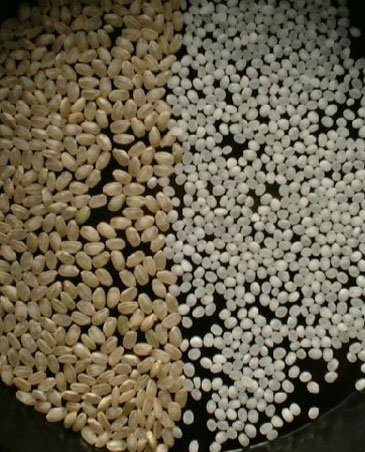
Differences Between Sake Rice and Ordinary Table Rice
There are three main differences between sake rice and ordinary table rice:
Presence of a Clearly Defined Shinpaku (Starchy Core)
1. A Distinct and Well-Defined Shinpaku (White Core) at the Center of the Grain
When rice is grown under optimal conditions and the grains develop to a larger size, the starch does not completely fill the center, creating a low-density, opaque white core known as "shinpaku".
Having a shinpaku allows koji mold to penetrate deep into the grain more easily, which is essential for effective saccharification during sake brewing.
2. A Common Misconception: "The Bigger the Shinpaku, the Better" A large shinpaku can cause the rice to crack during polishing, making it unsuitable for high-polish sake brewing.
The ideal shinpaku is not overly large but is small and well-defined, known as a "dot-shaped" or "linear-shaped" shinpaku.
3. The Example of Yamada Nishiki, the "King of Sake Rice"
The shinpaku in Yamada Nishiki, considered the finest sake rice, consists of a high proportion of dot-shaped and linear-shaped shinpaku grains, making it especially suitable for premium sake production.
The Size of the Grains
The larger the rice grains, the easier it is to process them, such as during polishing, washing, and steaming. Additionally, the uniformity of the grains is also an important factor. Variations in size can lead to inconsistencies in the polished rice, which in turn can cause uneven absorption of water and uneven fermentation.
Low Protein and Lipid Content
Proteins and lipids are sources of off-flavors and undesirable odors. These components are removed by polishing off the bran layer where they are concentrated. However, proteins and lipids present in brown rice will still remain inside the grain even after polishing as part of the white rice. Therefore, brown rice with inherently low protein and lipid content is considered ideal.
Rice Polishing
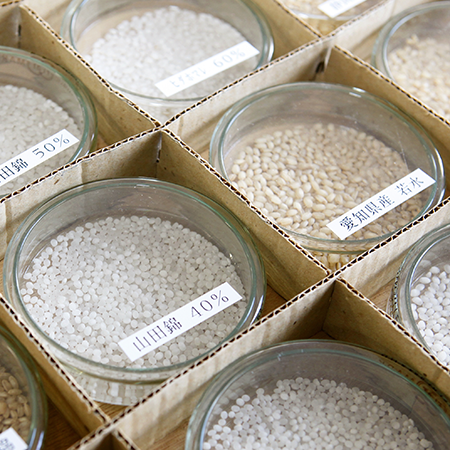
One of the most crucial factors in determining sake quality is the rice. Selecting the rice best suited to the desired sake quality and polishing it precisely is the foundation of sake brewing.
360°View Movie
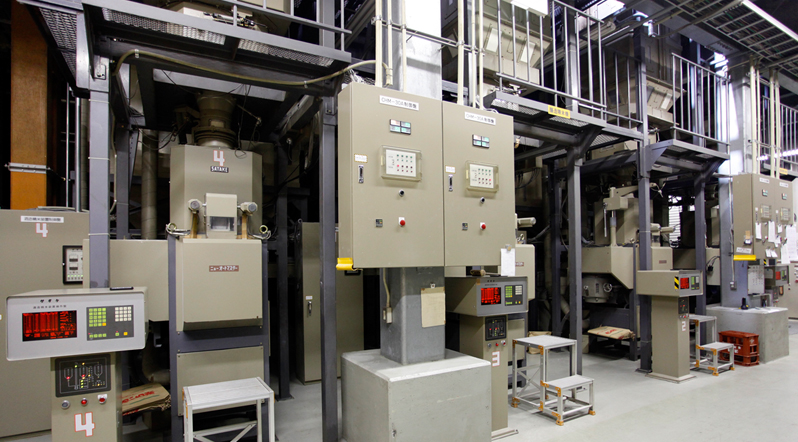
Polishing Rice (Seimai)
One of the most important factors that determine the quality of sake is the rice. Selecting the most suitable rice for the desired sake quality and polishing it accurately is the foundation of sake making. At Sekiya Brewing, we take this process seriously and perform our own rice polishing.
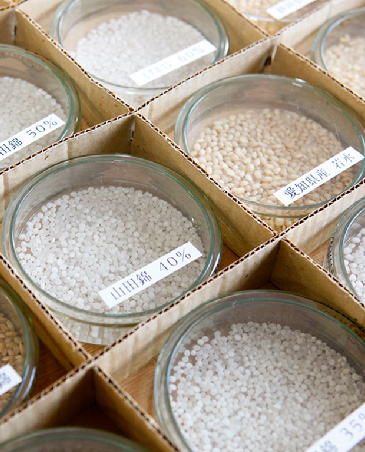
The polished rice is reduced in size while leaving the center intact, as shown in the photo (this photo shows rice polished to 40%). In sake production, we remove the outer parts of the rice, which contribute to off-flavors, and use only the center to pursue the best taste.
Polishing is done by passing rice through a high-speed rotating roll called a "grindstone" inside the rice polisher, gradually shaving off the surface. The speed of the grindstone (the rotation rate) and the flow of rice must be adjusted carefully during the process, as improper adjustments could lead to cracked or broken rice, preventing the desired level of polishing.
As the polishing progresses, the speed of the machine is gradually reduced, requiring more time for finer polishing. The time spent polishing does not directly correlate to the polishing ratio. For example, at 70% polishing ratio, it takes 12 hours; at 60%, it takes 24 hours; at 50%, 48 hours; at 40%, 72 hours; and at 35%, it takes 100 hours, progressively increasing the time required.
Since it is not feasible to monitor the process constantly, most breweries that perform their own rice polishing have automated machines that adjust the rotation speed and flow rate.
Rice polishing machines, along with associated equipment, are expensive and labor-intensive. As a result, most sake breweries outsource polishing to cooperatives or rice milling companies, a process known as "contract polishing."
Why is rice polished in sake production?
In the process of sake fermentation, excessive amounts of proteins, fats, and ash can cause mold and yeast to multiply too rapidly, making the fermentation process difficult to control.
Proteins contribute to undesirable flavors, while fats can cause unpleasant odors.
Therefore, the outer bran layer (the brown part), which contains these components, needs to be removed through rice polishing. However, these components are not only found in the bran layer but also in the starch (the white part) of the rice grain.
For this reason, while rice for regular consumption is polished to about 5%, sake rice is polished to 70% for standard-grade sake and as much as 35% for high-grade daiginjo sake, where more of the pure starch is required.
Polishing Ratio and True Polishing Ratio
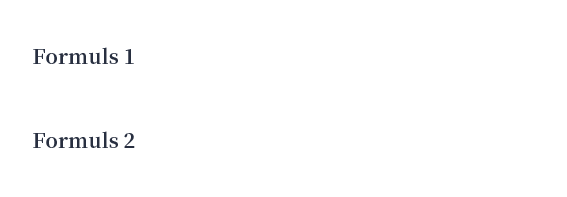
You may often see "Polishing Ratio ○%" written on sake labels. This percentage is calculated using formula (1).
For example, if 1,000 kg of brown rice becomes 600 kg after polishing, the polishing ratio is 60%. However, this figure does not account for rice that breaks or crumbles and is discarded as bran, making it an apparent polishing ratio.
Therefore, to more accurately determine the polishing ratio and the quality of the polished rice, the "True Polishing Ratio" is calculated using formula (2). This value indicates how much of the rice has actually been polished away.
Additionally, it is important to assess the quality of polished rice from various perspectives, such as examining grain weight distribution to determine uniformity and analyzing protein content.
Washing and Soaking
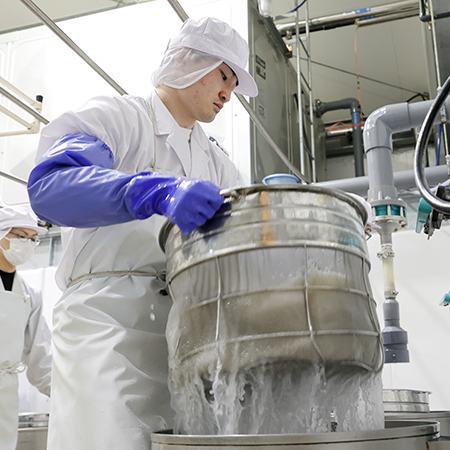
The polished rice is carefully washed (washing) and soaked simultaneously to adjust the moisture content based on its intended use. It is then left until the next day for moisture adjustment.
360°View Movie
Rice Washing and Soaking
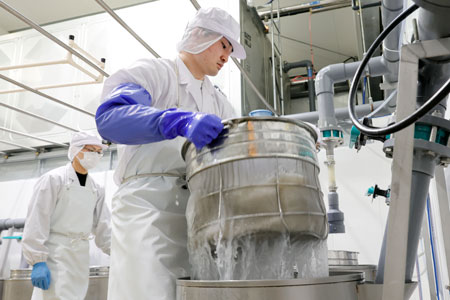
After the rice has been polished, it is thoroughly washed (rice washing), and its moisture content is adjusted through soaking, which can last anywhere from a few minutes to overnight, depending on the desired sake quality.
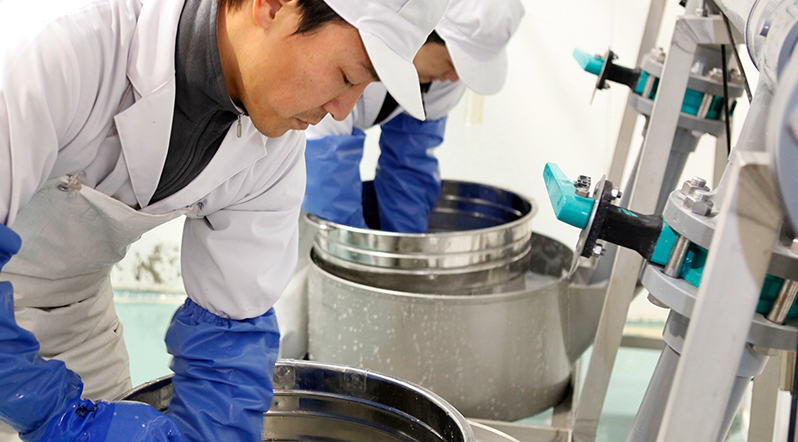
Freshly polished white rice is dry and rapidly absorbs water when washed, which can cause the grains to crack. Therefore, it is common practice to let the polished rice rest for about two weeks in a process called "karashi" to naturally restore its moisture content before washing off the remaining bran.
During rice washing, care must be taken to avoid breaking the rice grains due to strong impact. Recently, machines that use air bubbles (similar to a jacuzzi) to gently wash the rice have become available.
After washing, the soaking process is carried out to allow the rice to absorb the desired amount of water. Since highly polished rice absorbs water very quickly, the soaking time is adjusted by measuring absorption in seconds. This precise method is known as "limited water absorption."
Steaming Rice
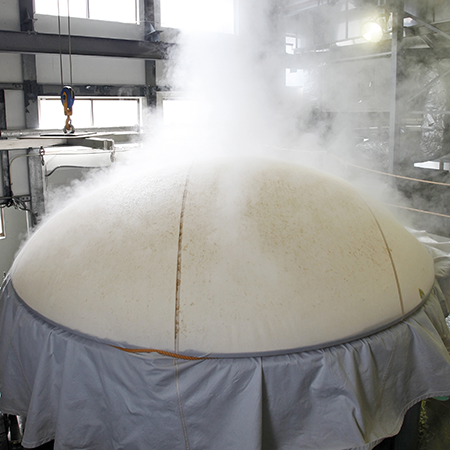
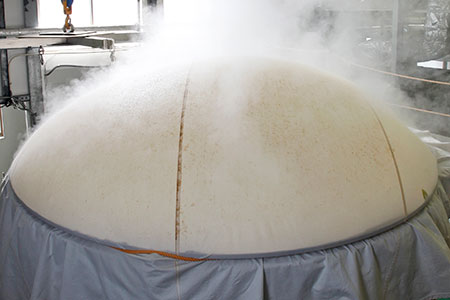
At Houraisen, the washed and soaked rice is steamed using a traditional "koshiki" steamer, based on the same principles as the old-fashioned Japanese kettle.
360°View Movie
Steamed Rice
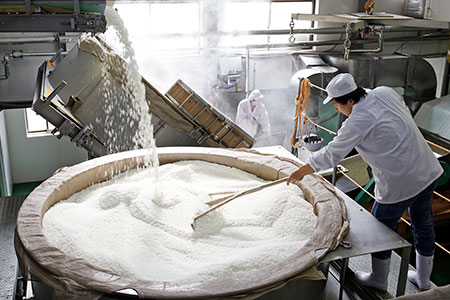
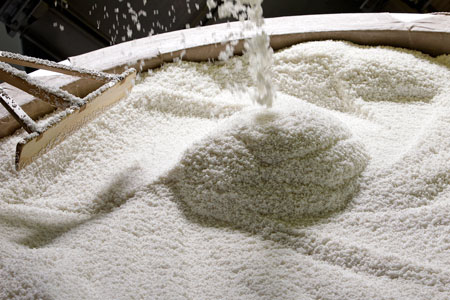
After the rice has been washed and soaked, it is steamed using a koshiki at Sekiya Brewery. This traditional steaming method follows the same principle as the classic Japanese wagama (traditional cooking pot). This process produces ideal steamed rice with a firm outer layer and a soft core.
The photo shows the cooling process (hōrei) in progress. Cooling is done to reduce the temperature of the steamed rice to the desired level.
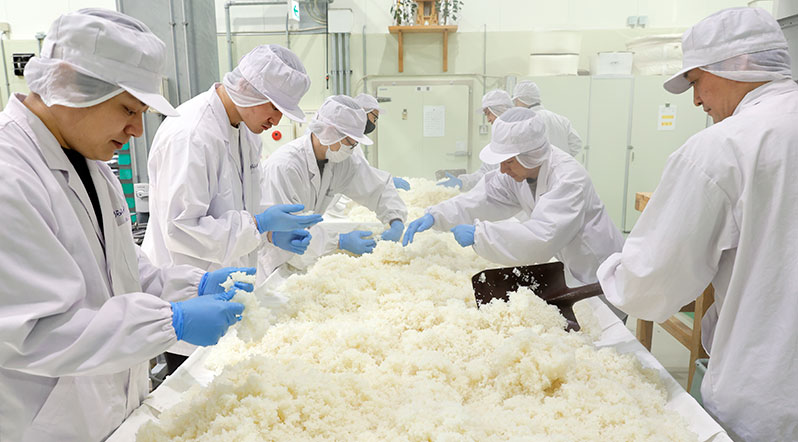
In sake brewing, it is common practice to steam rice to gelatinize (α-convert) the starch. However, there are also methods of cooking rice instead of steaming, known as "Yūmai-zukuri" and "Hime-meshi-zukuri."
At Sekiya Brewery, rice is steamed using a koshiki (traditional steaming vat) to achieve ideal steamed rice with a firm outer layer and a soft core for the following reasons:
1.The surface of the rice does not become sticky, resulting in better separation, preventing it from sticking to equipment or hands, which improves work efficiency.
2.Steamed rice is more conducive to mold growth, which is essential for koji making.
There are two types of machines used to steam rice: the koshiki and the continuous rice steamer. Both operate on the same basic principle.
The koshiki operates similarly to a seiro (traditional bamboo steamer), steaming the rice in batches. While it is less efficient because it cannot process rice continuously, it allows for precise control of the steaming process, resulting in high-quality steamed rice.
The continuous rice steamer uses a method in which rice placed on a conveyor belt is heated by steam.
Although it is less precise in adjusting the steaming process, it can handle large quantities of rice efficiently.
After steaming, the rice is cooled to the required temperature before being used for making koji, starter mash (shubo), or main mash (moromi).
There are two cooling methods:
・Natural Cooling: The steamed rice is spread out on cloth and allowed to cool naturally.
・Forced Cooling: Air is blown through the layers of steamed rice to cool it quickly.
Koji Rice
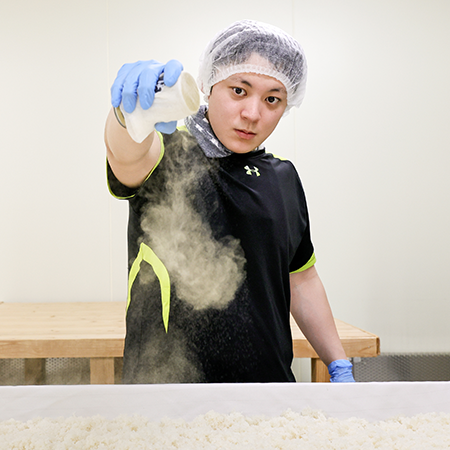
Koji is made by sprinkling steamed rice with koji spores (spores of yellow koji mold) and allowing the mold to propagate over approximately 50 hours in a dedicated room known as the koji room (koji-muro), where temperature and humidity are carefully controlled.
360°View Movie
Koji
Koji is made by sprinkling tane-koji (spores of yellow koji mold) onto steamed rice and allowing the mold to propagate for approximately 50 hours in a specialized room called the koji-muro, where temperature and humidity are carefully controlled.
The primary role of koji is to facilitate the fermentation of moromi by utilizing various enzymes produced by the koji mold.
The enzymes found in koji include:
・Saccharifying Enzymes (Glucoamylase): These enzymes convert starch into sugar.
・Liquefying Enzymes (α-Amylase): These help dissolve the rice.
・Proteases: These break down proteins into amino acids.
It is said that making good koji is the most crucial step in the sake brewing process.
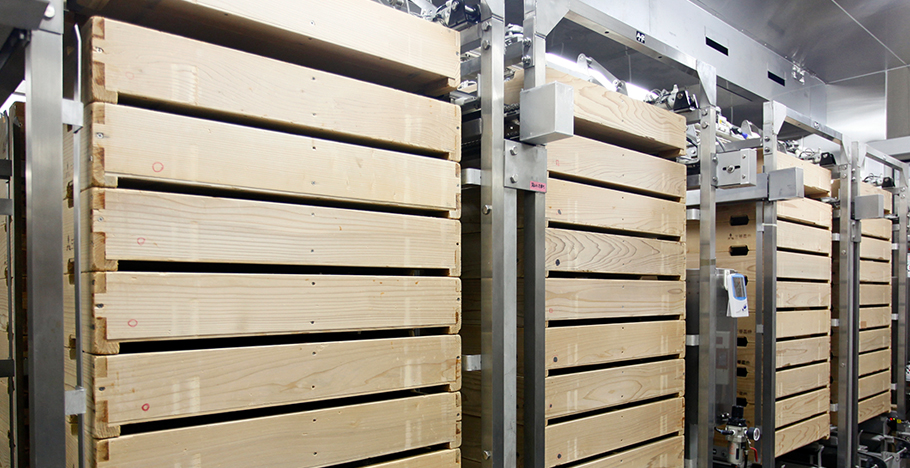
How to Make Koji
The process of making koji is called seigiku (koji production).
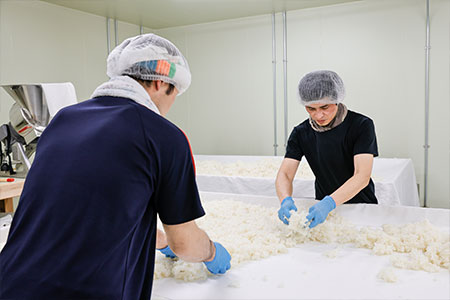
Hikikomi (Rice Transfer)
After the steaming process is complete, the steamed rice is brought into the koji-muro (koji-making room) and spread out on a platform called toko during the first day of koji production. The rice is managed several times to adjust the temperature and moisture to the appropriate levels, ensuring it reaches the target internal temperature.
▼
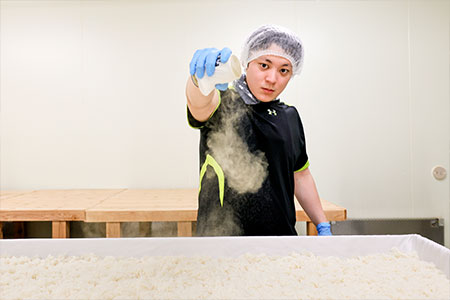
Tane-tsuke (Inoculation)
Once the steamed rice has reached the appropriate temperature and moisture level, tane-koji (koji spores) are evenly sprinkled over the rice. The process of ensuring that the spores cover each grain of rice is called toko-momi. After this, the rice is gathered into a single mass and wrapped in cloth.
Before proceeding to the next step, called mori, the rice undergoes a process called kirikaeshi (turning), where the clumped rice is loosened and mixed thoroughly to prevent uneven temperatures or moisture levels and to ensure uniform koji growth.
▼
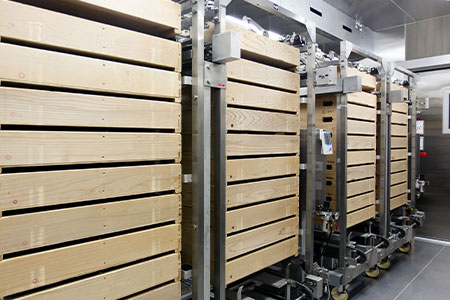
Mori (Portioning)
About 24 hours after hikikomi (rice transfer), the koji mold has propagated to a certain extent, and white spots become visible to the naked eye. At this stage, the rice is divided into smaller portions and placed into containers called koji-buta (koji trays) or koji-bako (koji boxes) to make temperature control easier and ensure uniform growth of the mold.
▼
Nakashigoto (Midway Work) & Shimaishigoto (Final Work)
After the mori process, two additional steps called nakashigoto and shimaishigoto are performed to release the heat generated during fermentation.
By gradually allowing the heat and moisture from the koji to dissipate, the koji mold extends its hyphae toward the center of the rice in search of moisture. Therefore, managing the temperature and humidity during these steps is critical to ensure proper koji development.
▼
Dekoji (Completion and Removal of Koji)
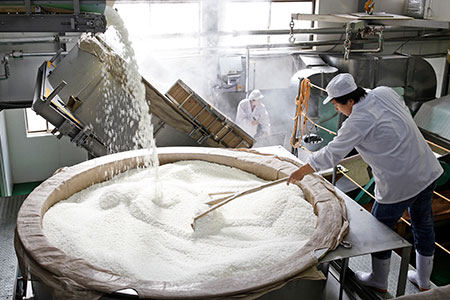
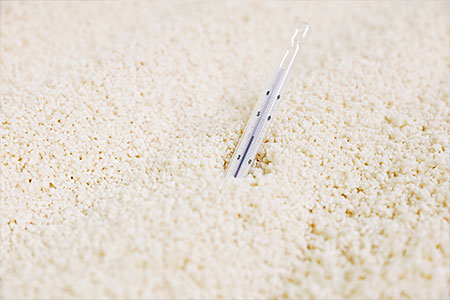
About 24 hours after the mori process (or 48 hours after hikikomi), the internal temperature of the koji reaches 40 to 42°C, signaling that the koji is ready. Koji with a chestnut-like aroma is considered high-quality and serves as an important indicator for koji-making management.
The completed koji is removed from the koji-muro (koji room) and spread out on a platform. It is then cooled evenly by mixing it several times to ensure there are no uneven temperature spots during the cooling process.
Fermentation
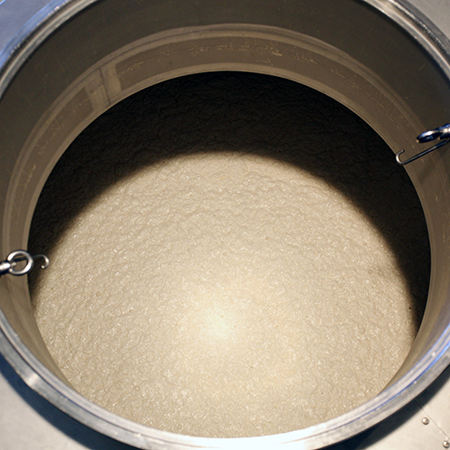
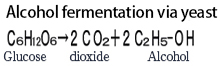
Shubo is the process of cultivating yeast, the main player in sake brewing, to a sufficient quantity. Yeast converts glucose, which is produced by koji, into alcohol.
360°View Movie
仕込み
Shubo
Shubo refers to a starter culture in which yeast, the main agent in sake brewing, is cultivated to the desired amount. Yeast plays a crucial role in converting glucose, produced by koji, into alcohol.
At Sekiya Brewery, shubo is primarily made using a method called the sokujo (quick fermentation method), which takes about two weeks. This is one of the most important steps in sake brewing, as it significantly influences the fermentation process.
Sake brewing requires two key components: koji, which converts starch into glucose, and yeast, which converts glucose into alcohol. The process of cultivating a sufficient amount of high-quality yeast is known as shubo-zukuri (shubo making).
In shubo making, lactic acid is essential to suppress the growth of wild yeasts and bacteria, which can cause spoilage during the brewing process, a condition known as fuzo (contamination).
There are two main methods for introducing lactic acid into shubo:
1.Kimoto-Type Shubo: This method uses naturally occurring lactic acid bacteria to produce lactic acid. Examples include kimoto and yamahai-shubo.
2.Sokujo-Type Shubo: This method involves adding brewing-grade lactic acid directly. Examples include sokujo-shubo and kouon-touka-shubo (high-temperature saccharified shubo).
Moromi (Main Mash)
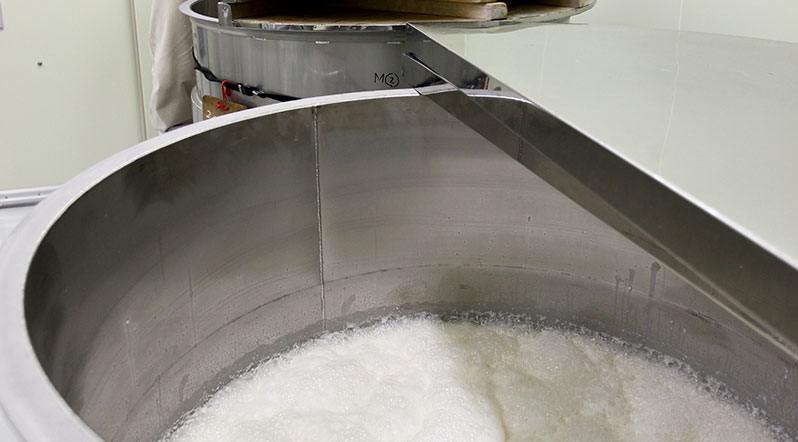
The shubo (sake starter) is transferred to the fermentation tank, where a process called sandanjikomi (three-stage brewing) is performed. In this method, water, koji rice, and steamed rice are each added in three separate stages.
During the moromi stage, two processes occur simultaneously: the conversion of starch into glucose by the enzymes in the koji, and the fermentation of glucose into alcohol by the yeast. This is known as heiko fukuhakko (simultaneous saccharification and fermentation).
The brewer continuously monitors the fermentation by observing the taste and appearance of the mash, adjusting the fermentation process to achieve the desired sake quality.
Moromi is a mash made by combining predetermined amounts of steamed rice, koji, shubo (starter culture), and brewing water, which is then fermented.
During this process, multiple fermentation reactions occur simultaneously, as shown in the diagram on the left. This unique process is called heiko fukuhakko (simultaneous saccharification and fermentation). It is a rare fermentation method, even among the world's various types of brewed alcoholic beverages.
Wine is made through a process called single fermentation, in which the natural sugars in grapes undergo alcohol fermentation.
Beer, on the other hand, undergoes a process called sequential fermentation. The saccharification of malt and the subsequent alcohol fermentation occur as two completely separate steps, which is why it is referred to as tanko fukuhakko (single-process multiple fermentation).
In contrast, sake brewing involves heiko fukuhakko (simultaneous saccharification and fermentation), which begins with koji making and continues through the complex processes that take place in the moromi stage.
This unique and intricate method of sake brewing is recognized as part of Japan's cultural heritage and has been registered as a UNESCO Intangible Cultural Heritage, a tradition we can take great pride in.
Compared to these, the fermentation taking place in Moromi of sake is a complex process that is one of a kind in the world. It is a world class fermentation technique of Japan.

About Moromi Preparation
The mixture of shubo (starter culture), koji, steamed rice, and water is called moromi. When this mash is fermented and pressed, it becomes refined sake (seishu).
The moromi is typically prepared over four days in a process known as the sandanjikomi (three-stage brewing method):
・Day 1: "Soejikomi" - The first addition of ingredients.
・Day 2: "Odori" - A resting day with no additional ingredients to allow fermentation to stabilize.
・Day 3: "Nakajikomi" - The second addition of ingredients.
・Day 4: "Tomejikomi" - The final addition of ingredients, marking the first day of the moromi fermentation process.
The moromi takes about 25 to 40 days to complete fermentation. During this period, the mash undergoes various changes in appearance (such as bubbles and surface texture).
One of the toji's (master brewer's) key responsibilities is to monitor the external appearance, taste, and ingredient analysis results to determine the optimal temperature and necessary adjustments for fermentation.
Finally, the moromi is pressed in a process called joso (sake pressing), resulting in refined sake (seishu).
Soejikomi & Odori
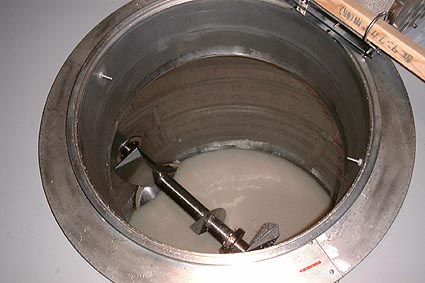
In the first stage of brewing, called Soejikomi, about one-sixth of the total amount of koji and water is added to the shubo (starter culture), followed by one-sixth of the steamed rice. The mixture is stirred thoroughly to ensure even distribution.
The following day is a rest period called Odori, during which no additional ingredients are added. This resting period allows the yeast to multiply and stabilize the fermentation process.
Nakajikomi
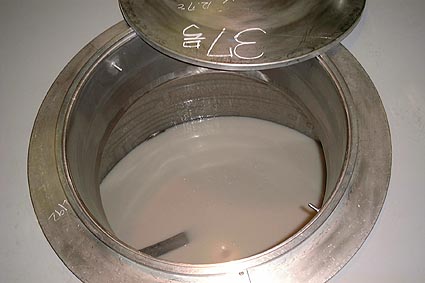
The day after Odori, 1/3 of Koji and water is added, and 1/3 of steamed rice is added while being stirred.
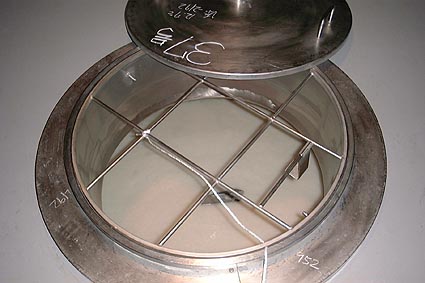
Tomejikomi (Final Addition)
On the day following Nakajikomi (the second addition), the remaining ingredients -- about half of the total koji and water -- are added to the mash. Then, the remaining amount of steamed rice is also added and thoroughly stirred to ensure an even distribution.
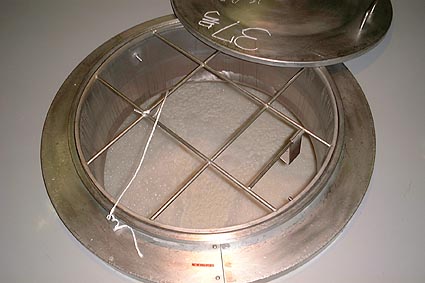
Suji-Awa
(Around Day 3)
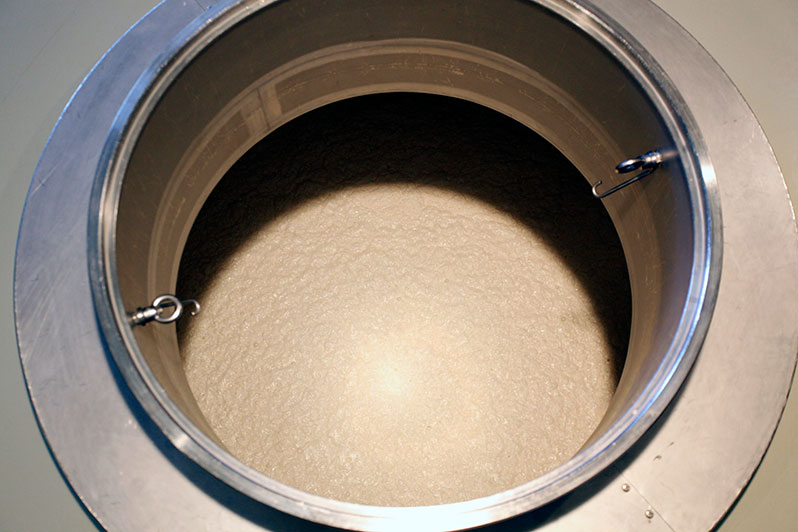
On the third day of fermentation, bubbles appear on the surface of the moromi, forming streak-like patterns. This indicates that the yeast has started fermenting. These bubbles are also known as kani-awa (crab bubbles) because the streaks resemble the marks left by crab legs.
Mizu-Awa
(Around Day 7)
By the seventh day of fermentation, light and white foam spreads across the entire surface of the moromi. This type of foam is called mizu-awa (water bubbles).
Iwa-Awa
(Around Day 8)
After the mizu-awa stage, the foam gradually becomes thicker and takes on a rocky appearance. This stage is referred to as iwa-awa (rock bubbles) due to its resemblance to the surface of a rock.
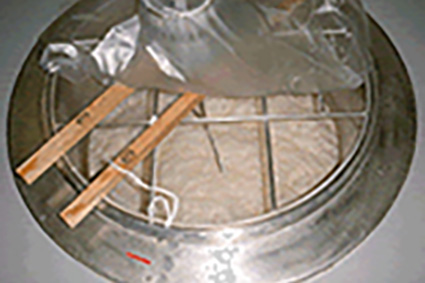
Taka-Awa
(Around Day 10)
When Iwaawa rise even higher, it is called Takaawa. Since large amount of yeast is contained in the bubble, they prevent the bubbles from spilling by performing a process called "Awakeshi" (popping bubbles).
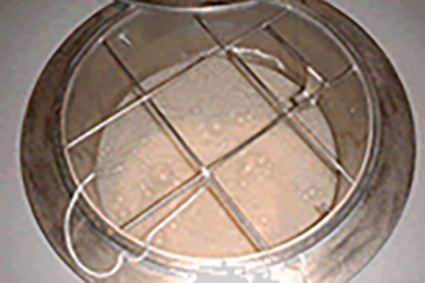
Ochitsuki-Awa
(Around Day 11)
After the Taka-Awa (high foam) stage, the foam begins to decrease in about a day. This stage is called Ochitsuki-Awa (settling foam).
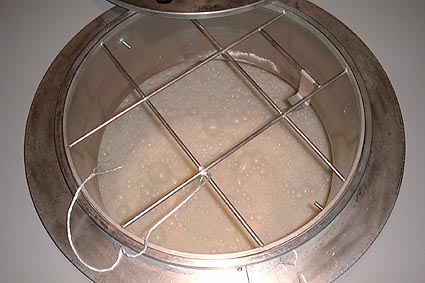
Tama-Awa
(Around Day 13)
After the bubbles drops, pretty bubbles similar to soap bubbles appear on the surface of Moromi. It is called Tamaawa.
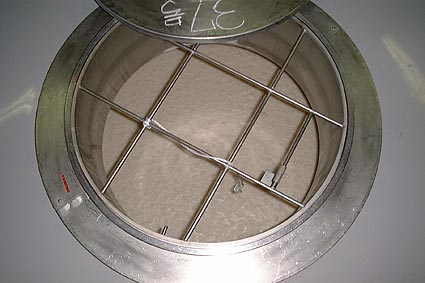
Chirimen-Awa
(Around Day 15)
After Tamaawa, the fermentation slows down and carbon dioxide produced by fermentation also decreases. The small bubbles that appears on the surface during this period is called Chirimenawa
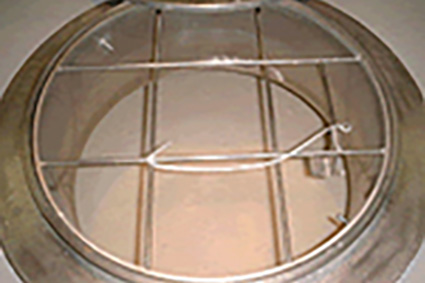
Bōzu
(Around Day 18 and Beyond)
In the late stage of moromi (fermentation mash), fermentation slows down significantly, resulting in very little foam formation.
This state is referred to as "Ji" or "Bōzu".
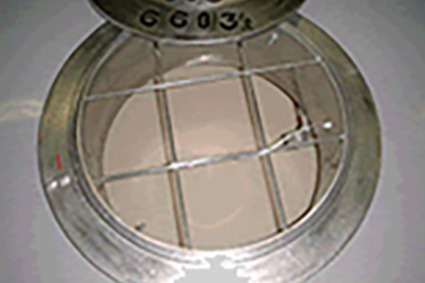
Just Before Jōsō
(Around Day 30)
Right before jōsō (pressing), the yeast begins to die off due to the alcohol it has produced. At this stage, dead yeast cells and rice residues may float to the surface of the moromi. This floating layer is called Futa (lid), as it covers the surface of the mash like a lid.
Joso
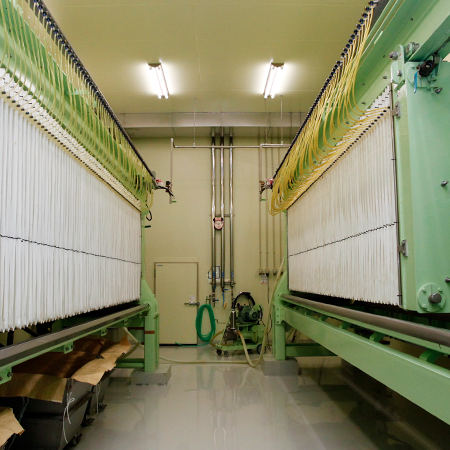
Through joso (the pressing process), sake is separated from the sake lees. For our daiginjo class, about half of the brewed rice becomes sake lees.
360°View Movie
Joso
Jōsō (Pressing) / Sakekasu (Sake Lees)
The moromi mash is completed in about 25 to 40 days and is then separated into sake and sakekasu (sake lees) through the jōsō (pressing) process.
The more carefully crafted the sake, the more sakekasu it produces.
The freshly pressed sake contains carbon dioxide and ori (rice particles), resulting in a rough yet fresh flavor profile.
Jōsō Methods
There are various methods for jōsō (pressing):
・Yabuta Method: Named after the manufacturer of the pressing machine, this method is used to press large quantities of moromi.
・Fune Method: Using a fune (traditional press), this method presses smaller amounts of moromi compared to the Yabuta machine.
・Fukuro-Tori (Hanging Bag Method): This is a highly meticulous method in which small amounts of moromi are placed in hanging bags and pressed by gravity. It is often used for competition-grade sake.
No matter which method is used for pressing, hygiene management is the most critical factor. Great care is taken to clean, sanitize, and dry machines, filter cloths, and sake bags, as well as to control the temperature and humidity in the workroom through air conditioning and dehumidification.
Additionally, once the moromi is filtered, it becomes seishu (refined sake). Therefore, nigori-zake (cloudy sake), which is filtered using a coarse mesh, is also classified as seishu.
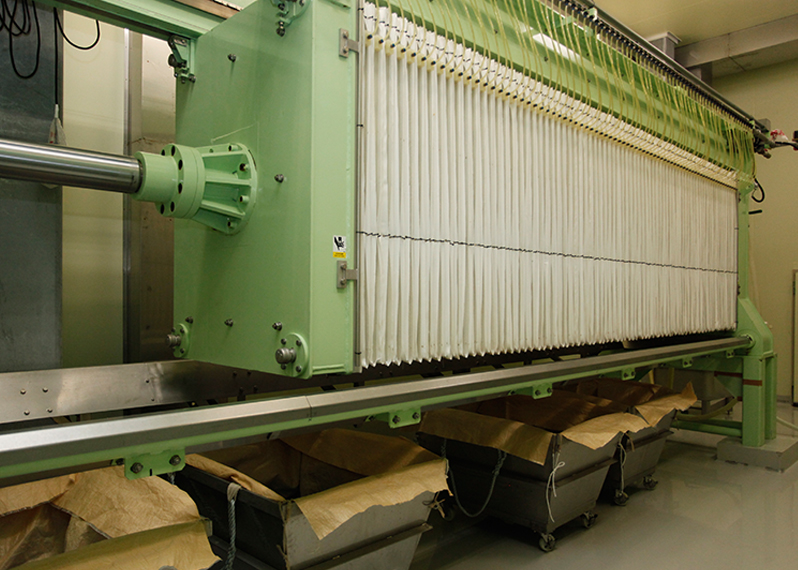
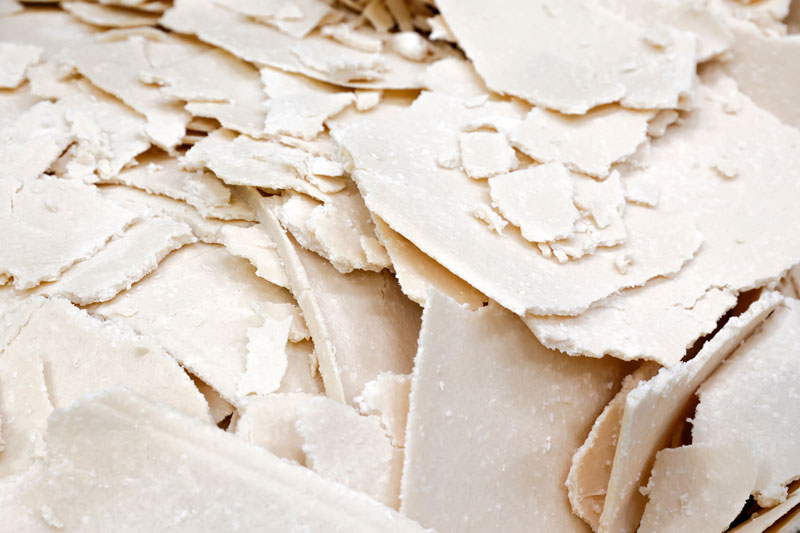
Peeling off the less
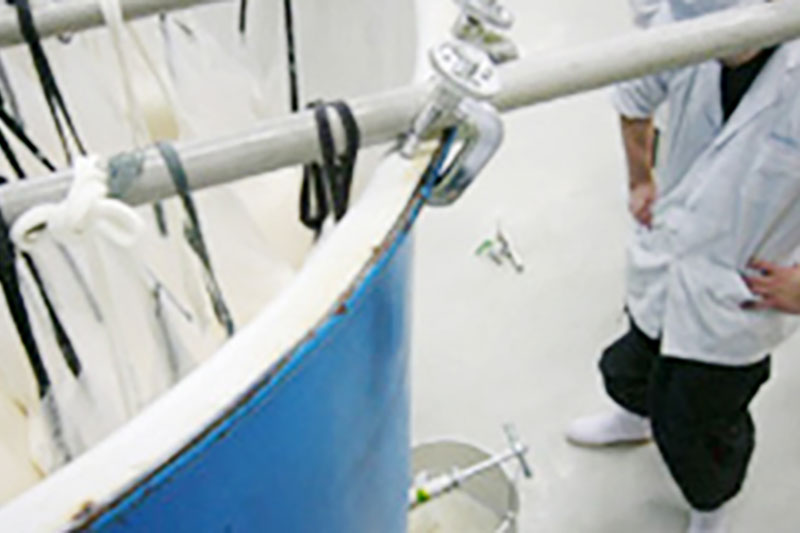
Fukurotori
Seishu (Unpasteurized Sake) / Hiire (Pasteurization)
When freshly pressed sake (muroka nama genshu -- unfiltered, unpasteurized, undiluted sake) is filtered to remove ori (sediment) and other particles, it becomes muroka nama sake (filtered, unpasteurized, undiluted sake).
All freshly made sake is nama-zake (unpasteurized sake). Since nama-zake still contains enzymes that contributed to yeast activity and moromi fermentation, slight fermentation may continue even after pressing.
To stabilize the flavor during storage and prevent spoilage, a process called hi-ire (pasteurization) is performed to stop fermentation.
Before bottling, the sake undergoes the following processes. The name of the sake varies depending on the steps it goes through during this process.
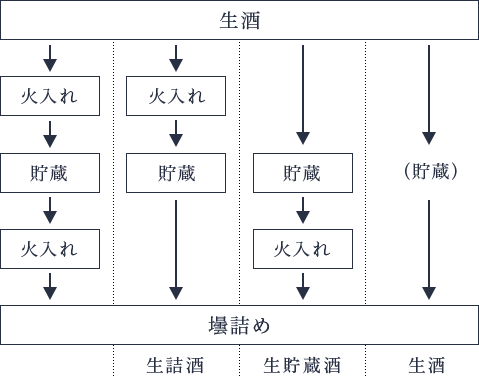
Storage / Maturation
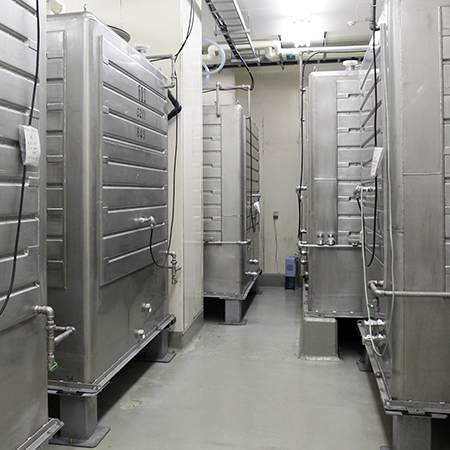
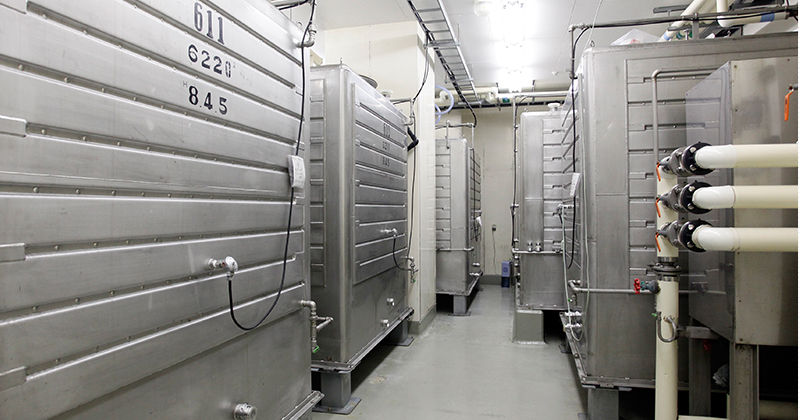
In storage tanks, the sake patiently waits for shipment. The storage period ranges from about six months to nearly three years for extended aging.
Storage / Maturation
Storage/Aging
The sake is quietly stored in tanks while waiting for shipment. The storage period can range from about six months for shorter durations to nearly 10 years for long-term storage.
By slowly maturing the sake at low temperatures, bitterness and harsh flavors are reduced, resulting in a deep, smooth, and well-rounded flavor profile.
Bottling / Product Shipment
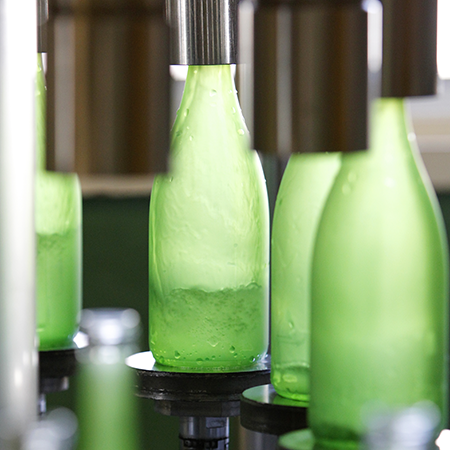
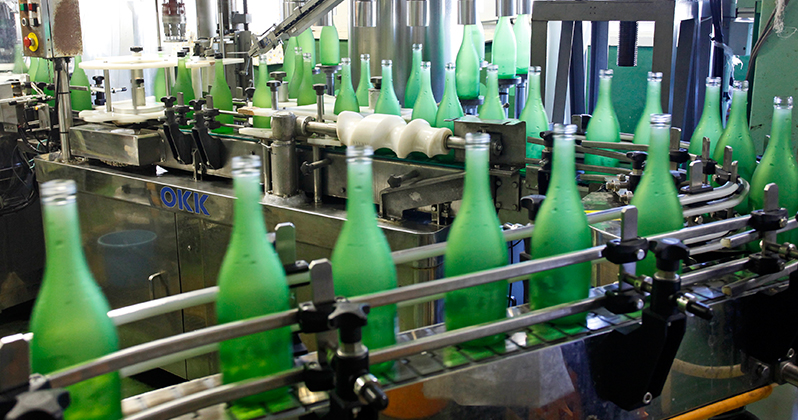
Finally, the sake enters the final stage of production. The bottled sake is stored in temperature-controlled warehouses and then shipped via refrigerated vehicles to nearby liquor stores.
360°View Movie
壜詰め
Bottling / Product Shipment
The final step has arrived. The bottled sake is placed in temperature-controlled storage and then shipped to nearby liquor stores using refrigerated trucks.
At Sekiya Brewery, careful temperature management is prioritized not only throughout the sake brewing process but also during and after shipment to ensure the sake reaches customers in optimal condition.
Constant Evolution
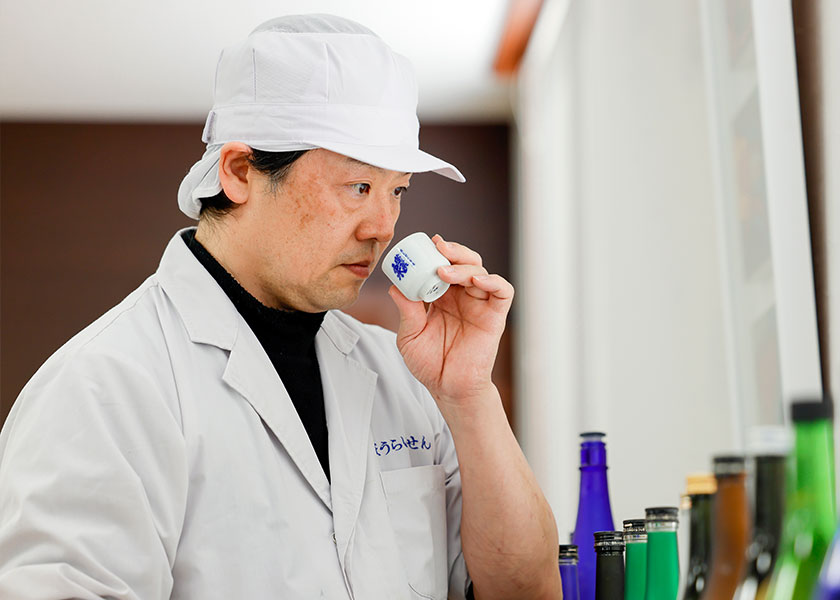
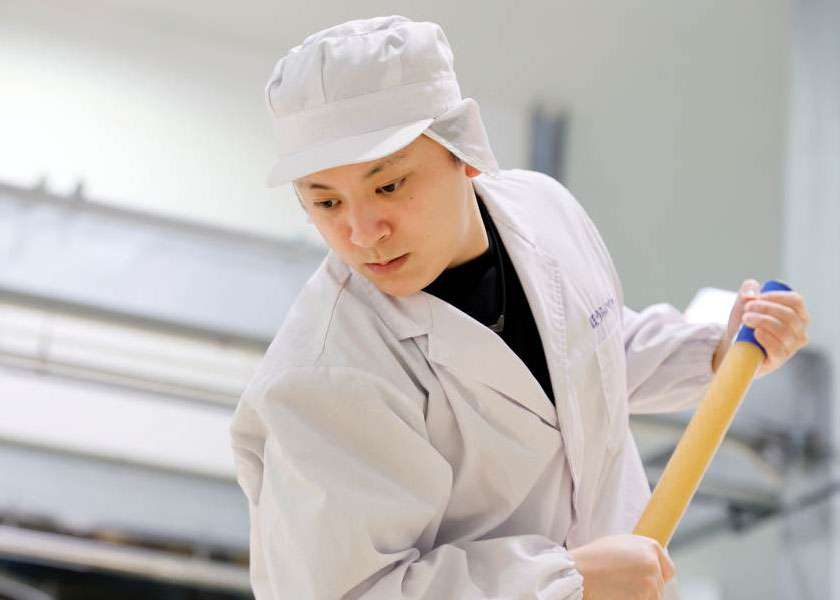
I am Takanobu Arakawa, the toji (master brewer) of the headquarters brewery.
At our main factory, many of the processes are mechanized. However, even with high-performance machines, it is ultimately people who operate them. Without the experience and technical expertise we have cultivated, we cannot fully utilize their capabilities or control the fermentation process effectively.
Rather than being controlled by machines, I aim to fully utilize them as tools and continue brewing delicious sake under the motto of daily evolution.
I take pride in being the toji at Sekiya Brewery's headquarters and strive to produce sake that brings joy to all.
The Joy of Sake Brewing
I believe that the joy of the brewer is reflected in the sake itself.
I am committed to creating an environment where the brewery staff can enjoy their work, as I believe that a positive and enjoyable atmosphere contributes to the quality of the sake.
When customers visit for a sake brewing experience, I hope they can sense the joy of the craft and that the final product will bring happiness to them.
At the Ginjo Kobo, we offer custom-made sake brewing, starting from 60 kg of rice. We work closely with customers to create a one-of-a-kind sake tailored to their preferences.
Through custom sake brewing, I want to share the fun and wonder of fermentation.
I will continue to put in my best efforts every day to meet and exceed customer expectations.